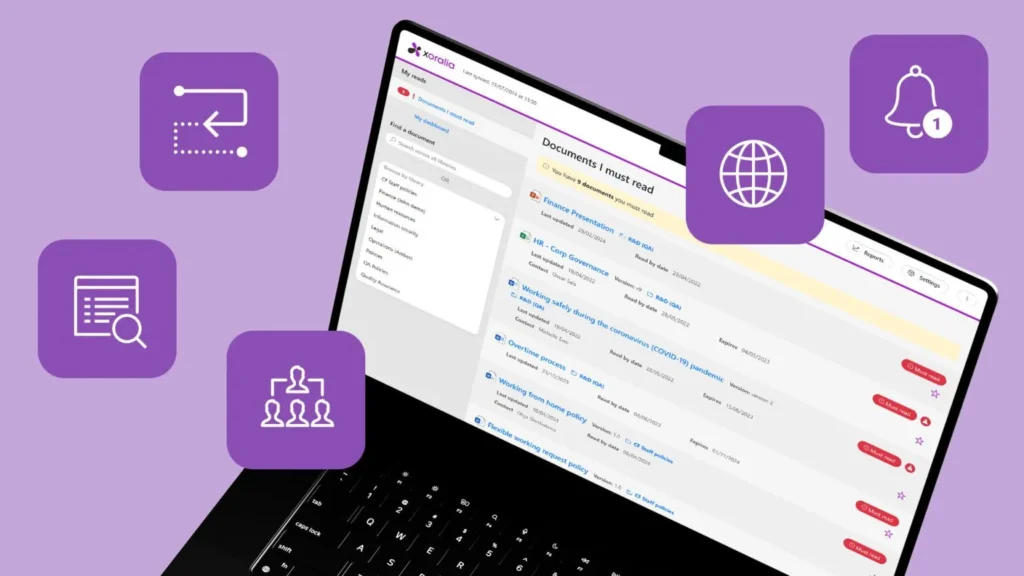
Policies were once handled as static documents, reviewed occasionally and stored out of sight. That model can feel exhausting when teams span locations, roles, and regulatory expectations that keep changing. A policy management software is meant to reduce that strain, yet many organizations still feel unsure about ownership, updates, and readiness. You may recognize the frustration of policies falling out of date despite best efforts. Or the quiet stress that builds as an audit approaches and clarity is still missing.
Guidance from NIST on governance controls and ISO standards on risk and policy oversight both emphasize steady, system-supported discipline. In this blog, we explain the key capabilities modern policy management software should offer, so you can better judge whether your current approach supports your teams and keeps pace with regulatory change.
Why Policy Management Has Become a System-Level Responsibility
Policy management now sits at the center of risk oversight, audit readiness, employee training, and accountability. You are no longer managing documents in isolation. You are coordinating people, obligations, and evidence across the organization. Policies rarely fall short because of wording. Gaps appear when ownership is unclear, updates are missed, or execution cannot be verified. When structure is missing, even well-written policies lose force.
Key operational pressures that make policy management a system concern:
- Multiple locations create inconsistent interpretations of the same policy.
- Spreadsheet or email tracking breaks when reviews, approvals, and audits overlap.
- Policy management software must coordinate ownership, timing, and proof, not just store files.
1. Centralized Policy Ownership With Role Clarity
Clear ownership brings steadiness to policy work. When accountability is explicit, policies progress without hesitation, even when teams are distributed or workloads shift. You spend less time coordinating handoffs and more time ensuring policies are accurate and understood. Ownership clarity also supports continuity, so work does not stall when roles change or priorities compete.
A strong ownership structure typically works because it:
- Assigns responsibility for drafting, reviewing, approving, and attesting to specific roles, so each stage has a clear owner.
- Connects named owners to deadlines and outcomes, making progress visible without relying on reminders.
- Maintains accountability records that show actions taken, timing, and outcomes, which helps audits and internal reviews move smoothly.
When ownership is structured this way, policies advance predictably and responsibility remains visible across teams.
2. Structured Policy Lifecycle Management
Policies stay reliable when they follow a defined lifecycle rather than informal routines. Treating policies as living assets helps you maintain consistency as requirements change and operations expand. You always know whether a policy is being created, reviewed, actively applied, or ready for retirement. This clarity supports steady upkeep without placing extra burden on individuals.
A well-defined lifecycle usually supports consistency by including:
- Drafting and internal review stages with clear transitions between contributors.
- Approved and active policies that are applied consistently across roles and locations.
- Scheduled review, revision, or retirement based on predefined criteria rather than urgency.
This structure allows updates to happen calmly and on schedule, instead of in response to pressure.
Version Control and Change Traceability
Change tracking strengthens understanding and trust. When updates are recorded with context, you can explain policy decisions clearly without searching through past communications. This makes reviews and audits more predictable and less disruptive.
Effective version control maintains clarity by retaining:
- Archived versions with timestamps to show the sequence of changes.
- Documented context that explains what prompted each update.
- Clear connections between revisions and triggering events such as internal reviews or obligation updates.
This traceability helps you demonstrate consistency and intent without extra preparation.
3. Regulation-to-Policy Mapping
Policies gain strength when they are directly connected to the obligations they support. Mapping requirements to specific policy sections gives you a clear view of alignment across your policy set. This structure helps you maintain accuracy without rechecking each document during reviews or audits.
A structured mapping approach supports confidence by providing:
- Direct links between external requirements and relevant policy sections, so alignment is easy to demonstrate.
- Immediate visibility into which policies may require attention when obligations change.
- Less manual verification during audits, since relationships between requirements and policies are already documented.
With mapping in place, policy alignment becomes easier to explain and maintain over time.
4. Embedded Workflow and Approvals
Approvals work best when they function as dependable controls rather than informal checkpoints. A structured workflow helps policies move forward in a steady and predictable way, even when teams are spread across locations or roles. You gain confidence knowing that each review step is followed consistently and that decisions are recorded clearly. This reduces uncertainty and keeps progress from depending on personal follow-ups.
A dependable approval workflow usually includes:
- Clearly defined review steps that follow the same sequence for every policy.
- Assigned responsibility at each stage, so progress is visible without reminders.
- Recorded approval decisions that create a clear record for audits and oversight.
Multi-Stage Review and Escalation Logic
Policies often require input from more than one perspective. Multi-stage review logic ensures that each policy receives the appropriate level of attention before it becomes active. This approach helps maintain balance between timely progress and careful oversight.
A practical multi-stage review structure supports consistency through:
- Configurable review stages aligned with the policy’s scope and impact.
- Escalation paths that keep timelines on track when reviews are delayed.
- Clear separation between policy authors and approvers to maintain objectivity.
5. Policy Distribution and Attestation at Scale
Policy distribution is most effective when it creates verifiable understanding, not just awareness. You need to know that policies reached the right people and that expectations were acknowledged. Attestation provides this assurance by turning communication into documented accountability.
A scalable distribution and attestation process typically includes:
- Targeted delivery based on role, region, or function to ensure relevance.
- Individual attestation records tied directly to each policy.
- Time-bound acknowledgment tracking that supports audit review without extra coordination.
6. Continuous Monitoring and Evidence Readiness
Policy assurance becomes easier when readiness is maintained as part of regular operations. Observing policy adherence over time helps you stay aligned without relying on last-minute checks. This steady approach supports confidence because expectations and outcomes remain visible and consistent across teams.
A continuous monitoring approach usually helps by:
- Confirming policy adherence through ongoing checks built into daily activities.
- Capturing evidence as actions occur and linking it directly to relevant policy requirements.
- Reducing audit preparation effort since documentation is already organized and up to date.
This structure allows you to demonstrate compliance calmly, without shifting focus during review periods.
7. Reporting That Supports Oversight, Not Just Metrics
Reporting works best when it supports understanding rather than interpretation. Clear reports help you explain where policies stand, who is responsible, and where attention may be needed. This clarity aligns with what leadership and regulators expect when they ask for updates or assurance.
Reporting that supports oversight typically provides:
- Operational views that help teams track day-to-day policy responsibilities.
- Executive summaries that show overall status across policies, owners, and risks.
- Direct answers to audit questions using existing reports, without assembling information manually.
With reporting structured this way, oversight becomes steady and informed rather than reactive.
How to Evaluate Policy Management Software Against These Capabilities
This framework helps you assess structure, not compare vendors. When you view your current setup through these capabilities, you can see where effort is spent on reminders, manual tracking, and patchwork processes. You also get a clearer sense of whether policies reliably move from intent to execution and then to defensible proof. A helpful evaluation focuses on repeatability. You want the same outcomes regardless of location, policy type, or who is on leave.
Use these checks to guide your review:
- Ownership clarity: Can you name the accountable owner for each policy, see who must review it next, and confirm attestations without chasing people?
- Lifecycle discipline: Are reviews scheduled and completed consistently, with traceable versions and documented rationale, or do updates depend on memory and urgency?
- Obligation linkage: Can you show which policy sections map to external requirements and quickly identify what must change when obligations shift?
- Readiness posture: Can you produce evidence and status reporting from ongoing work, or does audit preparation require a separate effort to reconstruct records?
Conclusion
Effective policy management depends on systems that connect responsibility, execution, and proof in a consistent way. Each capability reinforces the others, ensuring that ownership stays clear, policies remain current, and expectations are understood across the organization. When monitoring, reporting, and evidence readiness operate together, policy oversight becomes steady rather than reactive. This structure supports informed decision-making at every level and reduces reliance on last-minute coordination. As regulatory expectations extend across teams, locations, and functions, a system-based approach helps you maintain control, clarity, and confidence over time.