In almost every corner of folklore, from Eastern European legends to Hollywood blockbusters, the rules are the same: Wooden stakes for the heart, sunlight for the skin, and silver for everything else.
Whether it’s a werewolf, a shapeshifter, or a vampire, silver is the ultimate weapon of purification. But have you ever stopped to ask why? Why not gold? Why not iron or steel?
The answer isn’t just magic; it’s medicine.
The mythology of silver as a “holy” metal is actually rooted in hard science. Long before we understood germ theory or bacteria, our ancestors understood that this shiny, white metal had the power to stop the spread of death.
The Oligodynamic Effect
To an ancient Roman soldier or a Medieval traveler, illness was a supernatural event. If a wound turned black and smelled foul, it was “cursed” or “possessed.”
However, they noticed a strange pattern. If you stored water in a silver vessel, it stayed fresh for weeks. If you dropped a silver coin into a barrel of milk, it didn’t spoil as quickly.
This is known today as the Oligodynamic Effect.
Silver ions are toxic to bacteria, algae, and fungi. When silver comes into contact with a microbe, the ions penetrate the cell wall and disrupt the DNA replication. It essentially turns off the bacteria’s ability to breathe and reproduce.
In a world without antibiotics, silver was the closest thing humanity had to a cure-all.
- Ancient Greece: Hippocrates, the father of medicine, wrote about using silver filings to treat ulcers and promote wound healing.
- The Wild West: Settlers would put silver dollars in their water casks to kill dysentery-causing bacteria during long wagon journeys.
- Royalty: The term “Blue Blood” is rumored to come from European nobility who ate off silver plates with silver cutlery so frequently that they developed Argyria—a condition where the skin turns a slate-blue/grey color from ingesting minute amounts of silver. While a cosmetic side effect, these nobles often survived plagues that wiped out the peasantry, reinforcing the idea that the metal itself offered divine protection.
The Transition to Folklore
It is easy to see how this medical reality bled into mythology.
If you are a 17th-century villager, you don’t know what a “virus” or “infection” is. You just know that invisible forces (demons) invade the body, rot the flesh, and turn people into monsters (rabies, gangrene, plague).
You also know that silver stops the rot. It kills the invisible poison in the water. Therefore, logic dictates that silver must be pure enough to kill the monsters themselves.
The vampire—a creature that is essentially a walking corpse, a vector of contagion and blood—is the ultimate embodiment of “infection.” It makes perfect narrative sense that the only thing that can hurt a being of pure corruption is the metal of pure sterilization.
The Moon Connection
Beyond biology, there is the celestial connection. In alchemy, gold was the metal of the Sun—constant, warm, and unchanging. Silver was the metal of the Moon—cool, reflective, and prone to “tarnish” or change phases.
The Moon controls the tides and was believed to control the fluids of the body (the humors). Since monsters like werewolves are tied to the lunar cycle, silver became their alchemical counterweight. It was the physical manifestation of moon-light, solid enough to be forged into a bullet or a blade.
Modern Science Meets Ancient Myth
Today, we don’t worry much about werewolves, but the protective reputation of silver remains.
You see it in hospitals. Burn creams often contain Silver Sulfadiazine to prevent infection in raw skin. Catheters and surgical tools are often coated in silver nanoparticles to prevent bacterial biofilms from forming.
You also see it in high-performance clothing. Those “anti-odor” running socks? They are threaded with silver strands to kill the bacteria that cause sweat to smell.
Conclusion
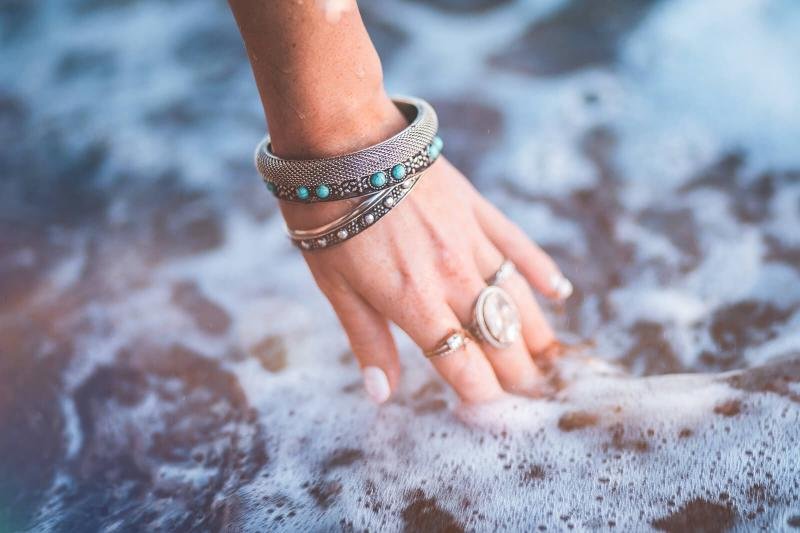
When we wear silver today, we usually think of it as a style choice. We like the way it catches the light or complements a cool skin tone.
But there is a weight to the history of the material. It is more than just a decorative element; it is an element of survival. For thousands of years, it was the shield humanity held up against the darkness of disease.
So, the next time you clasp a necklace or slide on a ring, remember that you aren’t just wearing an accessory. You are wearing a microscopic weapon—a shield that kings, queens, and folklore heroes trusted to keep the monsters at bay. Whether it is fashioned into a medical tool or a piece of sterling silver jewelry, the metal carries a legacy of protection that shines just as brightly as its surface.